What this clothing is not rated for
No flame resistance, no arc rating, no fluid barrier. What that means on a real job.
Updated 20 September 2026 · KECOLS guides
- Flame and arc
- Heat, which is the quieter problem
- Words we do not use, and why
- What is left when you take the claims away
Work clothing and protective clothing are two different products, and the second one costs more for a reason. Everything in this catalog is the first kind.
Flame and arc
This paragraph prohibits clothing made from acetate, nylon, polyester, rayon and polypropylene, either alone or in blends, unless the employer demonstrates that the fabric has been treated to withstand the conditions that may be encountered by the employee
Occupational Safety and Health Administration, 29 CFR 1910.269, Electric power generation, transmission, and distribution. Read 20 September 2026.
Our work line is polyester and cotton, knit or woven. Read that rule the way we do: these garments do not belong near an arc flash, a welding bay or open flame. For that work you need clothing tested and labelled for it.
| Job | What you need | What we carry |
|---|---|---|
| Electrical work near live gear | Arc rated clothing, tested to a standard | Nothing |
| Welding, cutting, hot work | Flame resistant clothing | Nothing |
| Roadside and night work | High visibility clothing to a hi vis standard | Nothing |
| General site, shop, warehouse, kitchen | Durable work clothing | The whole work line |
Shirts for the last row of that table
See the department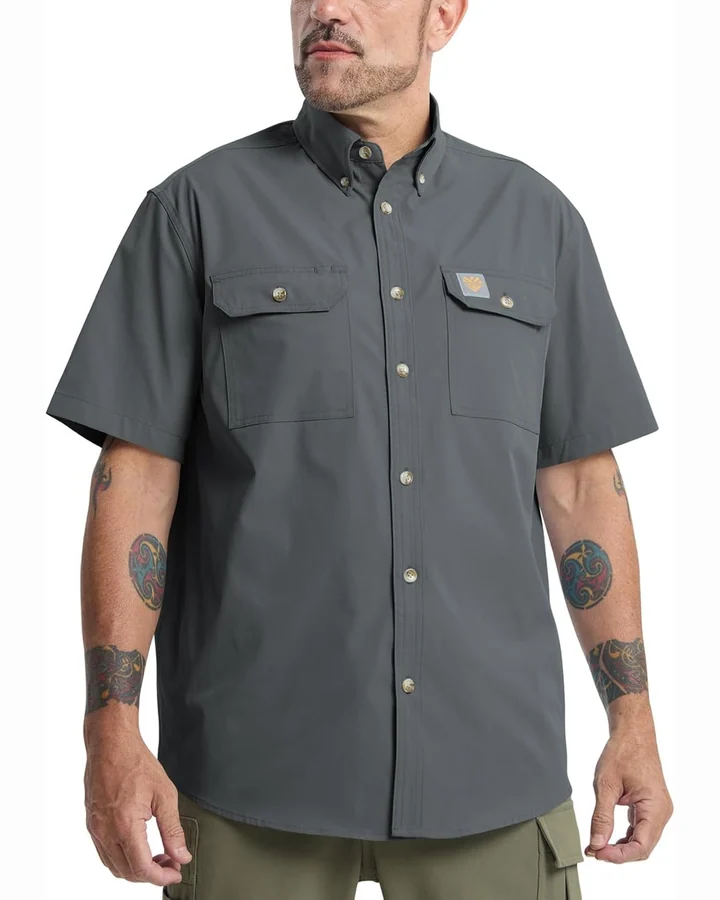
Short-Sleeve Utility Shirt
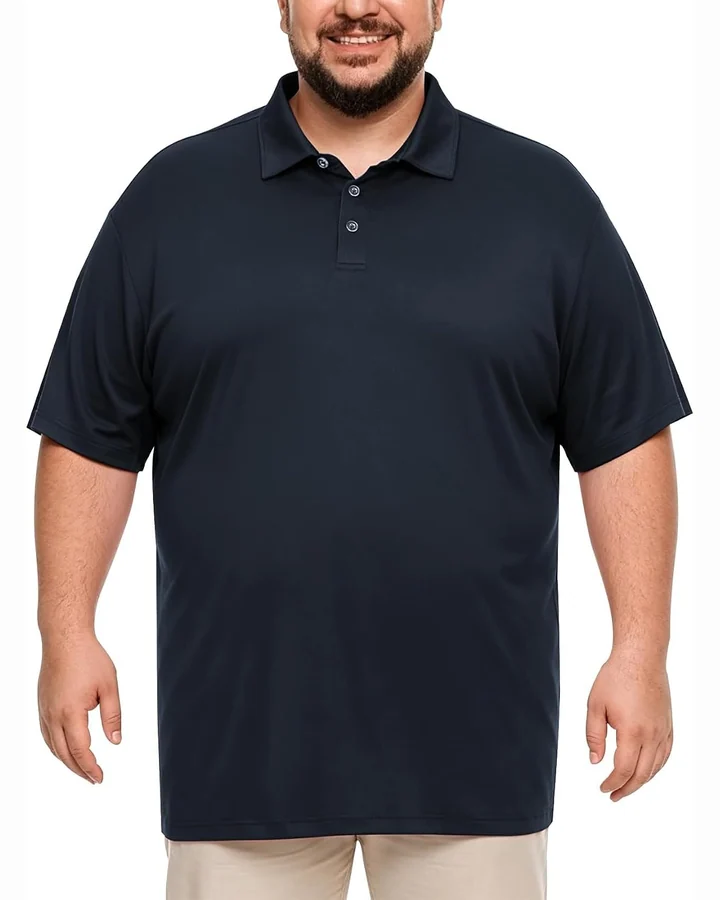
Big and Tall Polo
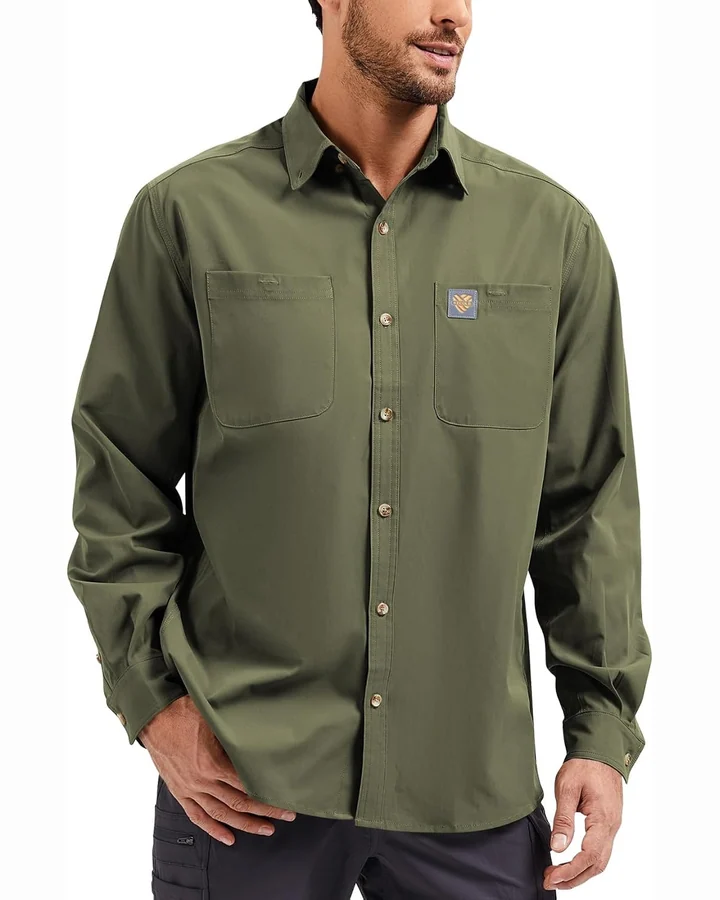
Long-Sleeve Utility Shirt
Heat, which is the quieter problem
Occupational heat stress is the combination of metabolic heat, environmental heat, and clothing and personal protective equipment (PPE), which results in increased heat storage within the body.
National Institute for Occupational Safety and Health (NIOSH), CDC, Heat Stress and Workers. Read 20 September 2026.
A heavyweight knit holds heat. That is the same property that makes it survive a strap, and there is no version of the fabric that does one without the other. In a hot shop, people size up and wear the shirt loose so air can move.
Words we do not use, and why
- Antimicrobial. That word describes a treatment with a test behind it, and this fabric has not been tested.
- Fluid resistant. A rating exists for that, and none of our fabric carries it.
- Flame resistant. It needs a standard, a label and a certificate. None of the three sits behind this fabric.
- Waterproof. Our shells shed a splash. Rain runs through them.
The knits this page is about
See the department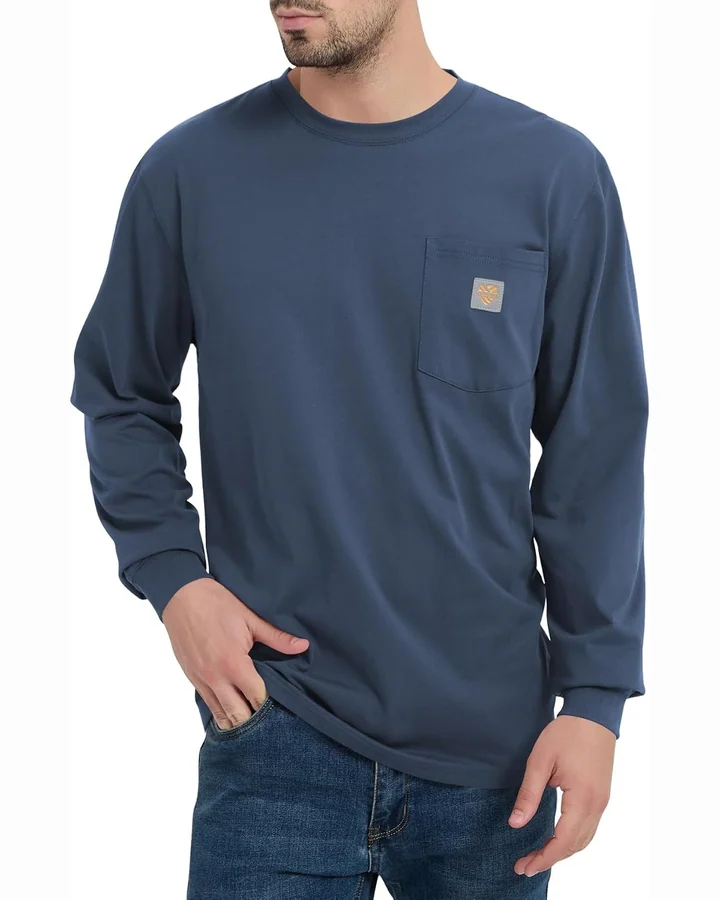
Long-Sleeve Work Tee
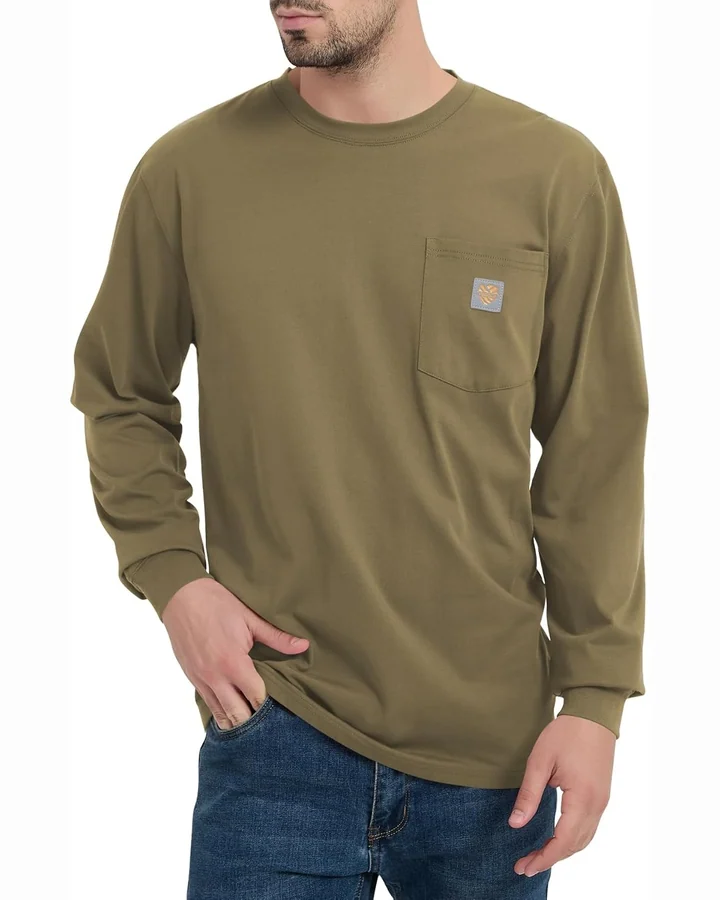
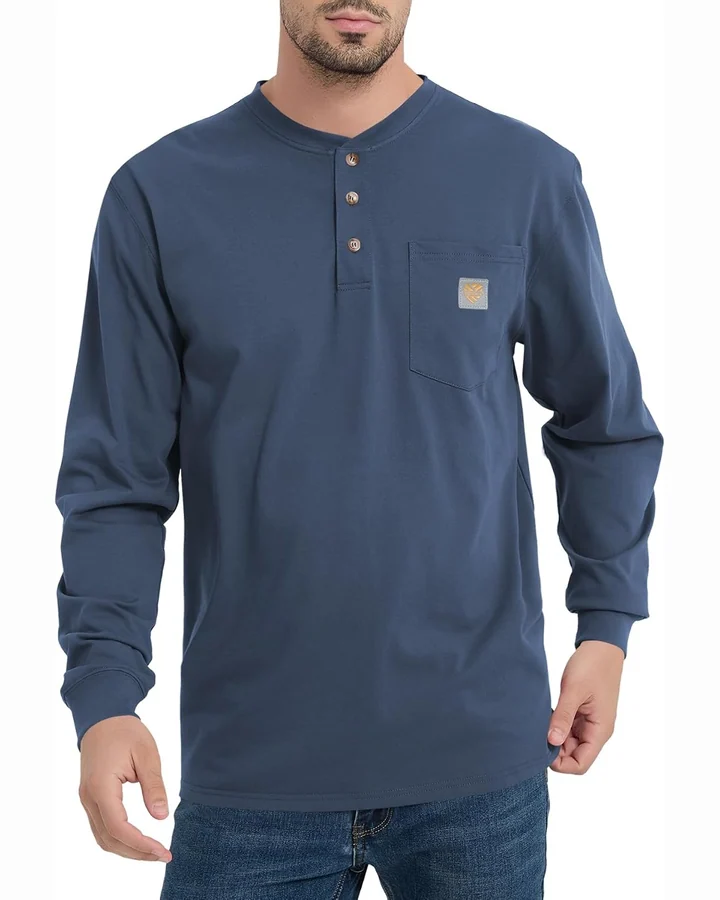
What is left when you take the claims away
Seams that survive a hot laundry. Pockets set where a hand lands. Colors that stay recognizable long enough for the replacement to match. That is a smaller promise than a hangtag usually makes, and we can stand behind all of it.
Sources read for this guide
- Occupational Safety and Health Administration, 29 CFR 1910.269, Electric power generation, transmission, and distribution. Read 20 September 2026.
- National Institute for Occupational Safety and Health (NIOSH), CDC, Heat Stress and Workers. Read 20 September 2026.
Nothing on this page is safety advice or medical advice. Kecols clothing is ordinary apparel: it carries no flame resistance rating, no arc rating and no fluid resistance rating. If your job calls for protective clothing, follow your employer's hazard assessment and wear garments certified for that hazard.